
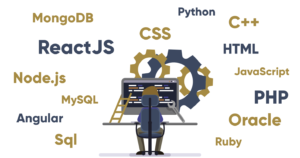
What Is a Full Stack Developer in 2025? A Practical Guide for Businesses
If you’ve been researching how to build a modern web app or improve an existing product, you’ve probably bumped into the term “full stack developer” more than once.
But what does a full stack developer actually do? Are they really a “one-person army” who can handle your whole product? And how do you decide whether to hire one full stack developer or a team of specialists?
In this guide, we’ll break down:
- What a full stack developer is (in plain language)
- The core skills and technologies they work with
- The business benefits and trade-offs of hiring full stack devs
- How to evaluate candidates or vendors who claim to be “full stack”
- A quick FAQ for common questions in 2025
1. What is a Full Stack Developer?
A full stack developer is a software engineer who can work on both the front-end and back-end of a web application:
- Front-end (client side): everything the user sees and interacts with (UI, buttons, layouts, animations)
- Back-end (server side): the logic, APIs, databases, and integrations that power your app behind the scenes
Think of a full stack developer as someone who understands the entire flow: from a click in the browser, to a request hitting your server, to data being stored or retrieved in a database, and then sent back to the user in a nice interface.
Because they see the “big picture,” full stack developers are often involved in architecture decisions, feature planning, and sometimes even DevOps (deployment, CI/CD, and monitoring).
2. Key Responsibilities of a Full Stack Developer
While the exact role depends on your project and company, a full stack developer typically:
Front-End Responsibilities
- Builds responsive user interfaces with HTML, CSS, and JavaScript
- Uses modern frameworks such as React, Next.js, Vue, or Angular
- Implements design systems or UI libraries for consistent styling
- Handles client-side state management, forms, validation, and API calls
Back-End Responsibilities
- Designs and implements REST or GraphQL APIs
- Writes server-side logic with technologies like Node.js, Express, Django, Ruby on Rails, Spring Boot, or similar frameworks.
- Integrates third-party services (payment gateways, authentication providers, external APIs)
- Ensures performance, security, and error handling on the server
Database & Data Layer
- Chooses and works with databases such as PostgreSQL, MySQL, MongoDB, or SQLite
- Designs database schemas and relationships
- Writes efficient queries and migrations
- Implements caching strategies where needed (e.g., Redis)
DevOps & Cloud (in Many Modern Roles)
In 2025, many full stack developers also touch parts of DevOps and cloud infrastructure
- Basic setup and maintenance of cloud resources (AWS, Azure, GCP, etc.)
- CI/CD pipelines for automated testing and deployment
- Containerization with Docker and sometimes orchestration (e.g., Kubernetes)
- Monitoring and logging (e.g., using services like CloudWatch, DataDog, Sentry)
3. What Skills Does a Full Stack Developer Need in 2025?
Here’s a high-level skill stack you can expect from a strong full stack developer today:
3.1 Core Web Fundamentals
- HTML5 – semantic structure of pages
- CSS3 (or Tailwind, Sass, etc.) – layout, design, responsive behavior
- Modern JavaScript (ES6+) – async/await, modules, promises, DOM manipulation
These are non-negotiable foundations for serious web development.
3.2 Front-End Frameworks
Common front-end choices include:
- React (often with Next.js for SSR/SSG)
- Vue.js
- Angular
For many businesses, React + Next.js has become a default choice due to performance, SEO friendliness, and a large ecosystem.
3.3 Back-End Technologies
A full stack dev will usually specialize in one main server-side ecosystem, for example:
- JavaScript/TypeScript: Node.js + Express, NestJS
- Python: Django, Flask, FastAPI
- Java: Spring Boot
- C#/.NET: ASP.NET Core
The key is not the specific language, but the ability to design clean APIs, handle authentication, manage business logic, and integrate data storage reliably.
3.4 Databases & Storage
- Relational: PostgreSQL, MySQL, SQL Server
- NoSQL: MongoDB, DynamoDB, etc.
- Basics of indexing, normalization vs. denormalization, and transactions
3.5 DevOps & Tooling
- Version control with Git (GitHub, GitLab, etc.)
- CI/CD pipelines (GitHub Actions, GitLab CI, etc.)
- Docker for packaging applications
- Basic understanding of environments: development, staging, production
3.6 Soft Skills
Full stack work is highly collaborative. Strong developers also bring:
- Clear communication with non-technical stakeholders
- Ability to translate business requirements into technical tasks
- Problem-solving and debugging skills across the stack
- Ownership mindset: thinking about the product, not just the code
4. Why Hire a Full Stack Developer? (Business Benefits)
From a business perspective, hiring a full stack developer can be very attractive, especially for startups and small to medium projects.
4.1 Faster Iteration
Having one person who understands the front-end, back-end, and infrastructure can:
- Reduce hand-offs between teams
- Speed up decision-making
- Make it easier to prototype and iterate quickly
4.2 Cost-Effectiveness
Instead of hiring multiple specialists (one front-end dev, one back-end dev, one DevOps engineer), a full stack developer can cover a wide range of responsibilities. This doesn’t always replace a full team, but it can significantly lower the initial budget for early-stage projects.
4.3 Better End-to-End Understanding
Because full stack developers see the whole system, they can:
- Make smarter trade-offs between front-end UX and back-end performance
- Spot potential bottlenecks early
- Improve reliability and maintainability across the whole application
5. When a Full Stack Developer Isn’t Enough
Despite the advantages, a single full stack developer is not always the right answer.
Consider a more specialized team if:
- You’re building a large, complex product that requires deep expertise in each area (e.g., high-scale real-time systems, advanced data science, etc.)
- You need pixel-perfect UI/UX and complex animations that demand a specialist front-end engineer
- You deal with complex infrastructure, strict uptime requirements, or heavy compliance (e.g., healthcare, fintech) where a dedicated DevOps/SRE team is critical
In many cases, companies use a hybrid model:
- Full stack developers as generalists who can work across layers
- Specialists (e.g., senior front-end, data engineer, DevOps) for the most critical or complex parts
6. How to Evaluate a Full Stack Developer (or Vendor)
If you’re hiring a full stack developer or choosing an agency, here are practical things to look for:
6.1 Real Projects, Not Just Buzzwords
Ask for:
- Live links to projects they’ve built or contributed to
- GitHub or portfolio repositories
- Screenshots plus a short explanation of what they built on front-end and back-end
You want to confirm they can ship production-ready software, not just follow tutorials.
6.2 Clarity About Their Preferred Stack
A good full stack developer is honest about:
- Their main front-end framework (e.g., React/Next.js)
- Their primary back-end stack (e.g., Node.js/Express, Django, etc.)
- Preferred database technologies
Someone who claims to be an expert in “everything” is usually a red flag. It’s normal to have a core stack and be comfortable with others.
6.3 Understanding of Non-Functional Requirements
Ask how they handle:
- Performance (caching, pagination, query optimization)
- Security (authentication, authorization, OWASP basics)
- Reliability (logging, monitoring, error handling, backups)
6.4 Communication & Process
Even the most talented developer can derail a project with poor communication. Look for:
- Ability to explain technical concepts in non-technical language
- Clear estimation of effort and trade-offs
- Regular progress updates and documented decisions
7. Typical Use Cases for Full Stack Developers
7.1 MVPs and Early-Stage Products
For startups and new ideas, a full stack developer can:
- Design and build an MVP end-to-end
- Integrate core features (auth, payments, dashboards)
- Deploy a working version to production quickly
7.2 Internal Tools & Dashboards
Need an internal admin panel, reporting dashboard, or lightweight tool? Full stack developers can often deliver fast, pragmatic solutions that integrate with your existing systems.
7.3 Modernizing Legacy Systems
A full stack dev can help you:
- Wrap legacy systems behind modern APIs
- Rebuild UI/UX with a modern front-end
- Gradually migrate to new architecture without a full shutdown
8. How to Work Effectively with a Full Stack Developer
To get the best results:
- Define clear business goals.
Instead of “we want a website,” be specific: “we want a SaaS dashboard where users can sign up, manage X, and receive automated reports.” - Prioritize features.
Agree on a backlog and a realistic first release (MVP). Avoid trying to build everything at once. - Provide quick feedback.
Review early prototypes and give feedback on both UI and behavior. Iteration is your friend. - Invest in documentation.
Ask the developer to document architecture, deployment steps, and core decisions. This makes future scaling and hiring easier.
9. FAQ: Full Stack Developers in 2025
Q1. Is it realistic for one person to handle the whole stack?
Yes—but with nuance. A full stack developer can handle end-to-end development for many small to medium projects. For larger, mission-critical systems, you’ll usually combine full stack devs with specialists (DevOps, data, security, etc.).
Q2. How long does it take to become a full stack developer?
Most sources estimate 3–12 months to get productive (with focused effort), depending on prior experience, and longer to become truly senior. The learning curve covers front-end, back-end, databases, and DevOps.
Q3. What’s the difference between a full stack developer and a software engineer?
“Software engineer” is a broad term; it can include mobile, desktop, systems, or backend-only roles. “Full stack developer” specifically means someone who works on both the front-end and back-end of web applications, often with some DevOps knowledge.
Q4. Are full stack developers still in demand?
Yes. In 2025, demand remains strong because companies value engineers who can see the whole system, prototype quickly, and collaborate across disciplines.
10. Final Thoughts
A full stack developer is not a magic unicorn who solves every problem—but they are a powerful asset for businesses that want to move fast, validate ideas, and build robust web applications without an oversized team.
If you’re planning your next product or modernizing an existing system, bringing in a skilled full stack developer (or a team that offers full stack capabilities) can give you:
- Faster time-to-market
- Better alignment between design, code, and infrastructure
- A more maintainable and scalable foundation for future growth
The key is to choose the right person or team, set clear expectations, and build a transparent, collaborative process from day one.
If you’re exploring options for your next project, consider discussing your idea with a full stack developer early—they can often help you simplify the scope and ship value much sooner than you expect.